- Do More With Less Using AI
- Posts
- When AI fails on stage
When AI fails on stage
A room full of senior trade show pros and two brand-new back-to-back workshops.

Noah Cheyer
March 31, 2026 • Estimated Reading Time: 3 minutes
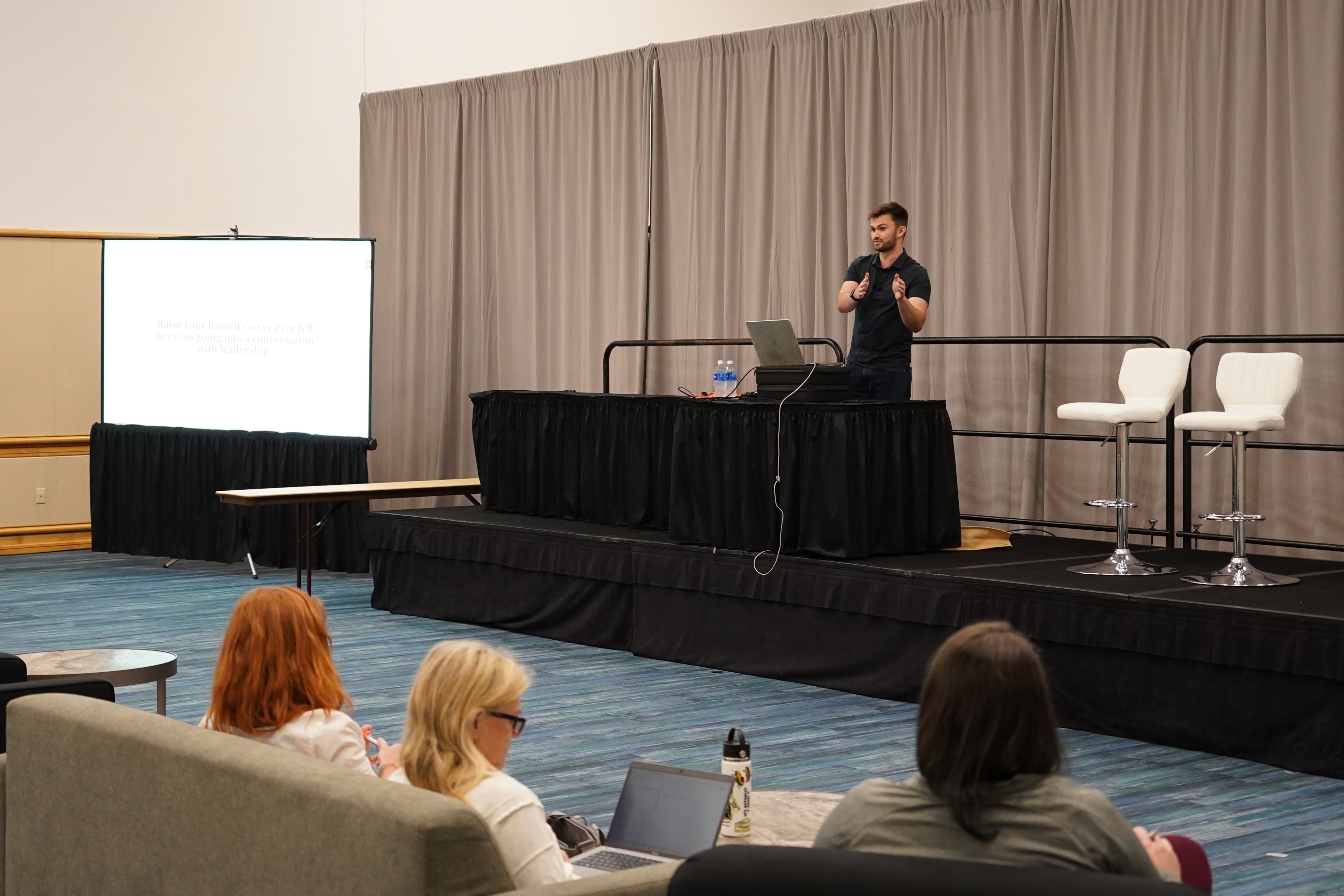
I have something to admit: I'm terrified of public speaking.
Which makes it a little ironic that I'm now the one on stage.
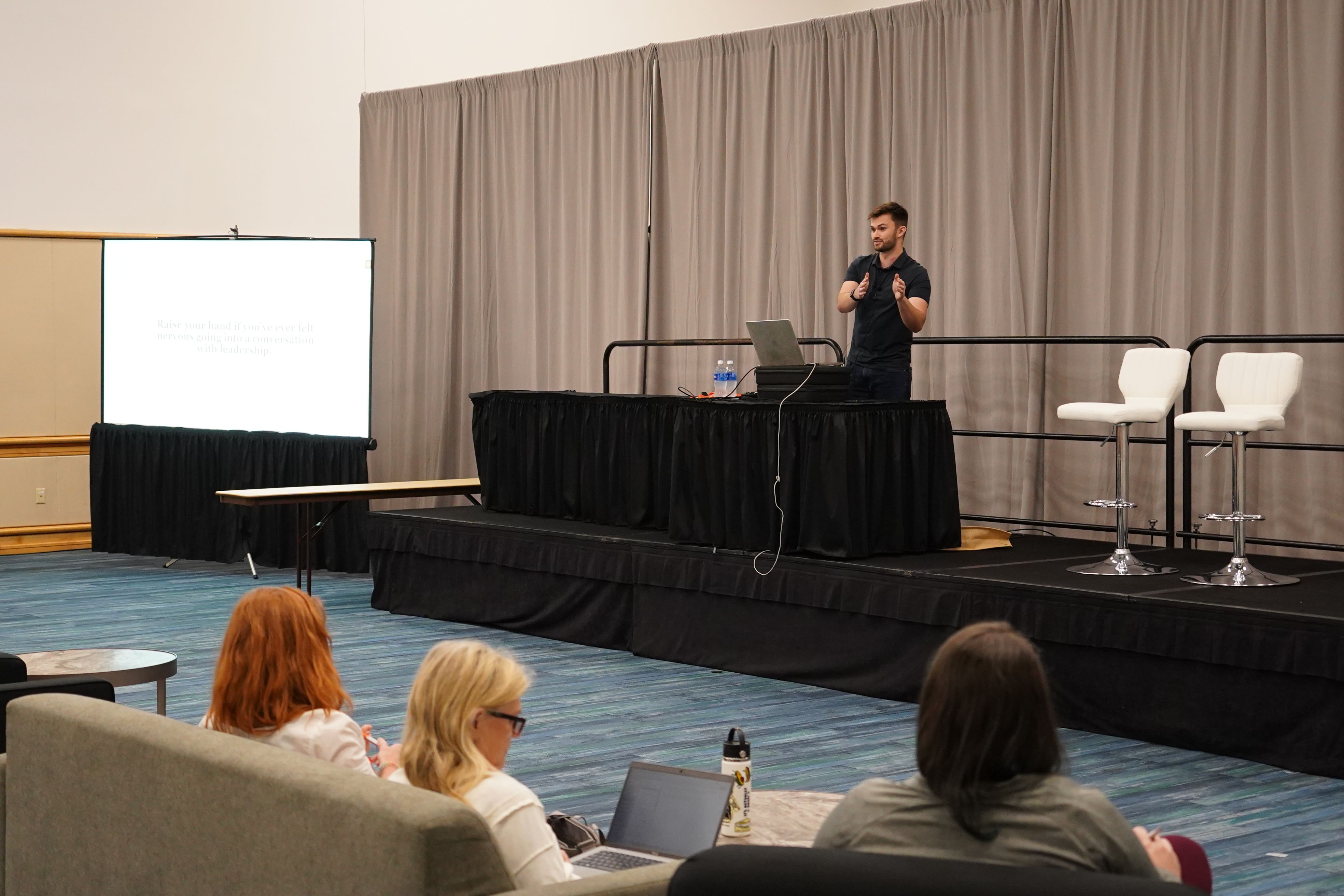
On Sunday, I did two back-to-back 90-minute workshops at ExhibitorLive for 100+ event marketers — one on AI for communications, one on practical use cases for exhibitors. Both brand-new, back-to-back, with no warm-up.

Walking in, I was acutely aware of the math: I'm 25. Some of the people in those rooms have been in their roles longer than I've been alive. Senior trade show professionals who've managed booths, budgets, and teams through every industry cycle you can name.
So what did I do to handle it?
I decided when planning my presentation: I wasn't going to walk in as the expert. I walked in as the person who could help orchestrate the conversation, and see how far we could push their assumptions about AI together.
That meant I was running each session alongside 50+ senior event marketers, rather than on my own.
When AI fails on stage (and what to do about it)
During the live demo, I pulled up ChatGPT and asked it to help provide feedback on how to prove event ROI to an executive. Standard prompt, nothing fancy.
The response was exactly what you'd expect: broad, generic, the kind of output that makes experienced event pros roll their eyes and conclude "AI doesn't actually work."
A demo not working as planned is every speaker’s nightmare, and being in front of real trade show experts, I knew I had to act.
I called it out myself. Turned to the room and said, “Does this feel generic to anyone?”
Most of the room was silent, and then one planner in the front spoke up. “That’s information every experienced trade show marketer already knows.”
So to fix the problem, I demoed how to build a custom GPT with real context based on their roles, leadership, and company to provide personalized feedback and support their specific situations.
I had them answer questions like:
Who are you having the conversation with?
What’s their role and goals?
What’s your role, and core function?
What industry are you in?
The output was far better.
Suddenly, the AI was coming up with practical feedback on how to frame conversations with leadership based on their actual backgrounds — ideas people hadn't considered and angles that fit their situation, specific enough to use.
People were surprised to see that AI could provide a strategic perspective that improved their planning.
The lesson wasn’t about the tool. Most people haven't made the jump from "using ChatGPT" to "giving ChatGPT enough to work with." A vague prompt yields vague output, while a personalized context yields something usable.
What stuck with me was that while everyone in the room was using AI weekly, almost no one in either session had built their own GPT. They'd heard of it, some had tried someone else's, but the idea of customizing it for their specific workflow — their booth, their team, their show schedule — hadn't really happened yet.
That's the next step, which is easier than you think.
The things I kept hearing from the room
Between the demos and the framework, both groups shared what's happening on the ground.
A few themes kept surfacing:
The executive pressure is real. CFOs and senior leadership want to talk about revenue — not efficiency, not time saved, not team capacity. That puts exhibit and event professionals in a tough spot, as a large part of trade shows is untraceable compared to other marketing channels like paid ads. It's genuinely valuable, but hard to put in a slide deck for the C-suite.
The repetitive questions at trade shows are universal. Before every show, the same messages flood in from the team: what's the booth number, what should I wear, what are the hours. People in the room laughed when it came up, not because it was funny, but because everyone recognized it immediately. The AI agent walkthrough to handle FAQs was a big hit in the room.
Platform adoption is still slower than expected. Most people in the room had a paid Copilot plan through their company, but had never really used it. People are using AI individually, quietly, on their own terms — but getting a whole team to build consistent habits around it is a different challenge entirely that companies aren’t yet doing for their event departments.
None of these are surprises. But hearing them from a room full of senior trade show professionals confirmed that there’s still room for growth in the context event professionals provide to AI, and that there needs to be more awareness around the use cases that work.
If you want to start somewhere concrete
I've built a suite of free GPTs for event and exhibit professionals covering everything from repetitive team FAQs to contract auditing to RFP generation. If you haven’t created your own GPT yet, these are a good place to start.
Pick one that matches your biggest current headache and see how context changes your experience using AI.
Till next time,
Noah Cheyer
Do More With Less Using AI
PS: What's the most repetitive question your team gets before a show? Reply and tell me, and it might become the next thing I build.
Reply